Building a beautiful Shopify theme is only 10% of the battle. The harshest reality of e-commerce is that when you finally hit publish, no one is coming. Most merchants panic, launch random Meta ads without conversion tracking, and burn through their budget in a week. Figuring out how to promote your Shopify store requires a blended architecture of slow-burn organic traffic and high-ROI paid acquisition. In this guide, we break down 9 proven strategies to acquire profitable customers.
It’s crucial to understand the SERP Gap—the disconnect between attracting clicks and converting them into sales. Factors like broken Core Web Vitals and slow mobile rendering can make every paid visitor more costly. With only about 8% of visitors purchasing on their first visit, capturing emails and implementing retargeting strategies becomes vital.
In this guide, we will explore nine proven strategies that can help you acquire profitable customers effectively.
Key Takeaways
- Establish a strong foundation for your sales funnel.
- Address the SERP Gap to enhance conversion rates.
- Optimize your site to avoid costly paid traffic.
- Utilize email capture and retargeting for better results.
- Focus on improving Core Web Vitals for a smoother experience.
- Scale traffic strategically across multiple channels.
Understanding the Funnel Foundation: Avoiding the SERP Gap
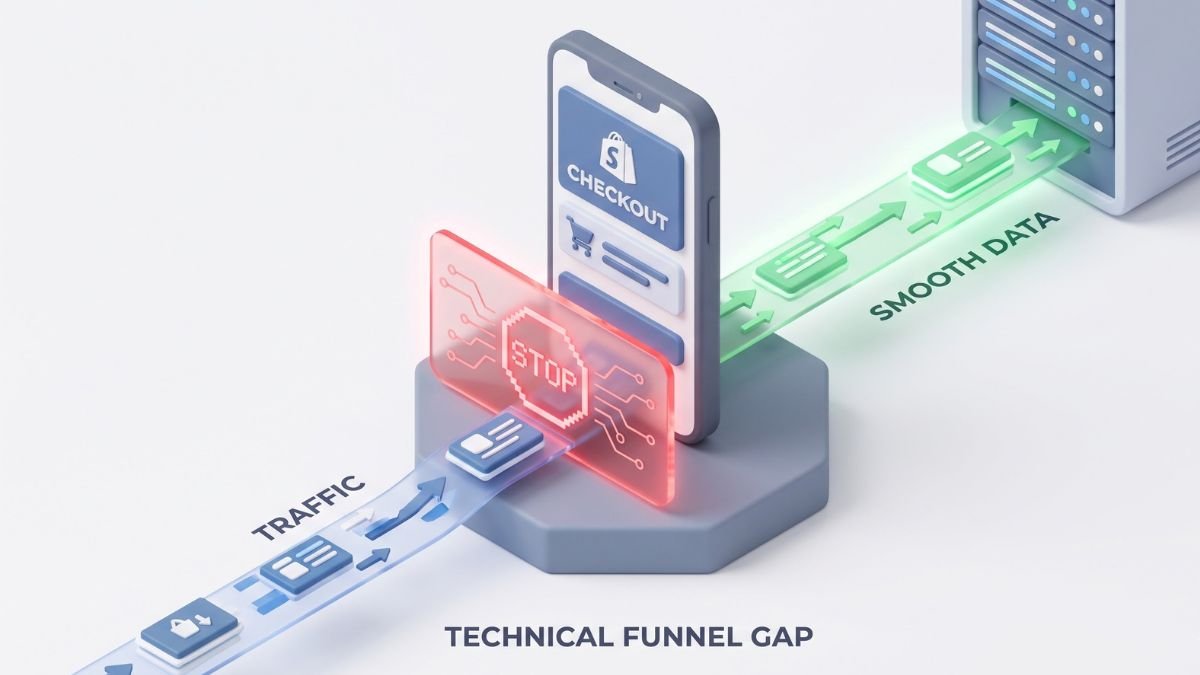
A solid understanding of the funnel is crucial for effective customer acquisition. Before investing in paid media, it’s essential to diagnose your technical funnel. This includes examining Core Web Vitals, mobile usability, and checkout friction.
Only about 8% of visitors make a purchase on their first visit. This statistic underscores the need for a robust post-purchase flow. Mapping out the customer journey can enhance retention and drive repeat sales.
Consider these critical aspects:
- Audit performance: Check loading times, image sizes, and mobile layout.
- Connect Core Web Vitals: Slow pages can hurt product discovery and marketing data.
- Post-purchase mapping: Focus on confirmation, education, and cross-sell opportunities.
- Utilize benchmarks: Use the 8% first-visit purchase rate to justify retargeting efforts.
- Sitemap strategy: Treat Shopify’s sitemap as a starting point for search engine optimization.
| Aspect | Importance | Impact on Revenue |
|---|---|---|
| Core Web Vitals | High | Directly affects conversion rates |
| Mobile Usability | Medium | Increases customer engagement |
| Checkout Friction | High | Reduces cart abandonment |
Enhancing Organic Architecture for Free Shopify Promotion
Creating a strong foundation for organic growth is key in the competitive e-commerce landscape. A well-structured site can help in attracting potential customers without incurring costs. Focus on building programmatic landing pages that highlight product attributes and use cases.
Utilize the fact that approximately 40% of shoppers search for products on search engines. Prioritize commercial keywords and validate demand using tools like Google Keyword Planner, Ahrefs, or SEMrush. This ensures your content is relevant and visible in search results.
Leveraging Programmatic SEO and Automated Short-Form Video
Repurpose product demonstrations into automated Instagram Reels and TikTok videos. Use engaging hooks and clear captions to capture attention. This approach not only enhances visibility but also drives traffic to your site.
Community Seeding on Reddit and Quora
Engage with communities on platforms like Reddit and Quora. Provide valuable insights and specific answers to questions. This builds trust and encourages users to explore your brand further, without appearing overly promotional.
How to promote your shopify store

A comprehensive promotional strategy is vital for any thriving e-commerce venture. Merchants must leverage multiple channels to effectively reach their audience. The following methods create a balanced approach to customer acquisition and retention.
- Social Media: Utilize platforms like Instagram and Facebook to showcase products and engage with potential customers.
- Email Marketing: Send targeted campaigns to keep your audience informed and interested.
- Influencer Partnerships: Collaborate with influencers to expand your reach and build credibility.
- Paid Ads: Invest in ads to gain immediate visibility and attract visitors.
- Web Push Notifications: Keep customers updated on promotions and new products.
- Referral Programs: Encourage existing customers to refer friends by offering incentives.
- SEO: Optimize your site to improve organic search rankings and visibility.
- Brand Partnerships: Team up with complementary brands for cross-promotions.
- Offline Promotion: Don’t underestimate traditional marketing methods to reach local customers.
As Nielsen reports, “92% of consumers trust suggestions from friends and family more than advertising.” This makes referral mechanics particularly valuable as paid traffic costs rise. Implementing a referral program, like Taylor Stitch’s $20 credit for referrers, can significantly enhance customer acquisition.
Paid Acquisition: Facebook and Instagram Mastery

In the realm of e-commerce, leveraging paid acquisition on social media platforms is essential. Facebook and Instagram provide robust tools for reaching potential customers effectively. Rather than relying on fleeting tactics, focus on broad targeting and dynamic creative testing.
Begin by building campaigns that target broad eligible audiences. Use strong conversion signals and allocate a sufficient budget. This approach is more sustainable than stacking interests, which can lead to fragile results.
Dynamic creative testing is crucial. Experiment with various combinations of hooks, demonstrations, and testimonials. This helps identify which messages resonate best with your audience.
Broad Targeting and Dynamic Creative Testing
- Utilize Instagram’s multiple placements: Stories, News Feed, Explore, and Shop.
- Follow the four-second video rule; capture attention immediately.
- Separate audiences based on their engagement level, from prospecting to purchasers.
As noted in a recent campaign, “Participatory social content can create brand demand beyond direct-response advertising.” This was evident in Crocs’ 2019 #ThousandDollarCrocs campaign.
Implementing Effective Retargeting Logic
Effective retargeting is about understanding customer behavior. Segment your audience into categories such as engaged viewers and cart abandoners. Tailor your messaging to reflect their actions within the funnel.
Comparing Meta acquisition with Google Shopping reveals a critical insight: competition can inflate costs, especially against giants like Alibaba and Amazon. Therefore, strategic planning is key.
| Strategy | Benefit | Implementation |
|---|---|---|
| Broad Targeting | Increased reach | Focus on eligible audiences |
| Dynamic Creative Testing | Identifies winning combinations | Test various hooks and formats |
| Retargeting Logic | Improved conversion rates | Segment based on user behavior |
Building an Omnichannel Growth Strategy
An effective omnichannel approach is crucial for capturing and retaining customers. This strategy seamlessly integrates organic and paid channels, guiding potential buyers through every stage of their journey.
Organic channels are essential for demand creation and establishing authority. They help in building trust and credibility, which is vital for long-term success. Meanwhile, paid channels can accelerate proven offers and high-intent product demand.
Consider these key points:
- Influencers: Utilize them as media partners and content creators. Attach UTM parameters and unique codes to track effectiveness.
- Coordinated Journey: Combine creator content, social proof, and referral prompts for a cohesive customer experience.
- Testing Hypothesis: Treat the 71% preference for influencer traffic as a metric for evaluation, not a definitive rule.
- Post-Purchase Advocacy: Leverage Nielsen’s finding that 92% of consumers trust recommendations from friends over ads.
- Budget Allocation: Reallocate funds weekly based on performance metrics like revenue and customer acquisition cost.
Leveraging Omnichannel CAC for High-ROI Growth
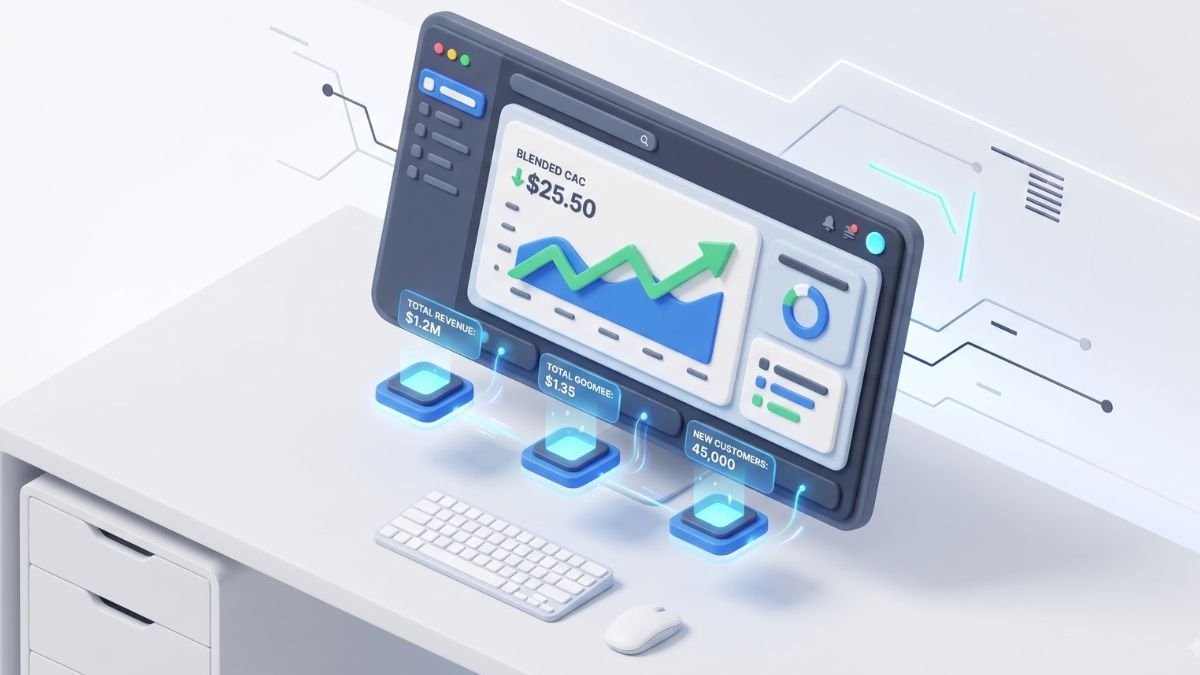
Understanding blended customer acquisition cost (CAC) is essential for maximizing growth in today’s e-commerce landscape. This metric combines paid spend, organic labor, creative production, incentives, returns, and post-purchase revenue. By optimizing blended CAC, you can achieve a more effective marketing strategy.
Only about 8% of site visitors make a purchase on their first visit. This statistic highlights the importance of capturing leads through email, retargeting, and referral programs. For instance, Fashion Nova effectively uses web push notifications to re-engage visitors, enhancing their return on investment.
Consider these strategies for calculating and optimizing blended CAC:
- Calculate blended CAC: Divide total acquisition investment across paid media, creators, content, software, incentives, and labor by new customers acquired.
- Avoid cheap clicks: Focus on assisted conversions, repeat orders, and overall contribution margin.
- Segment CAC: Analyze by first-order margin, device, geography, and customer type to identify unprofitable growth.
- Referral incentives: Include programs like Taylor Stitch’s $20 credit and 20% friend discount in CAC calculations.
| Strategy | Benefit | Implementation |
|---|---|---|
| Calculate Blended CAC | Comprehensive view of costs | Track all acquisition investments |
| Focus on Assisted Conversions | Maximize marketing efficiency | Evaluate all customer touchpoints |
| Segment by Customer Type | Identify profitable segments | Tailor strategies accordingly |
Scaling Your DTC Store with Data-Driven Insights
Scaling a direct-to-consumer (DTC) business relies heavily on leveraging data-driven insights. Transforming metrics into actionable strategies is essential for optimizing your store’s performance.
For instance, Daag generated an impressive $17,000 in just two days from a single email. This demonstrates the power of owned-audience segmentation, which deserves as much attention as paid acquisition.
Consider these strategies:
- Build a weekly growth dashboard: Track sessions, conversion rates, average order value (AOV), and more.
- Analyze product recommendations: Use bundles and cross-sells to enhance customer experience and boost sales.
- Connect Shopify data: Integrate email, advertising, and analytics for comprehensive insights.
- Scale strategically: Only expand when cohorts show acceptable payback and operational capacity.
- Test mobile experiences: Many Shopify stores utilize Tapcart for mobile apps; evaluate the cost against potential conversion gains.
As Pakolorente shows, improved AOV and faster conversion times can be achieved through effective product recommendations. These insights can drive your marketing efforts and lead to significant results.
Conclusion
Building a successful online business hinges on strategic planning and execution. Start by fixing Core Web Vitals, landing-page relevance, and checkout friction. Prioritize tracking and post-purchase automation before increasing traffic to your Shopify store.
Next, create durable search and content assets. Approximately 40% of shoppers rely on search engines to find products, making SEO a long-term investment.
Leverage Facebook, Instagram, Google, influencers, email, referrals, and web push notifications as parts of a unified customer acquisition and retention system. Measure each channel against contribution margin and blended CAC to ensure profitability.
Finally, apply the same discipline as brands like Daag and Fashion Nova. Scale your business only when new and returning customers, products, marketing costs, and operational capacity support profitable growth.