
Driving paid traffic to a leaky Shopify store is just burning cash. I’ve seen it firsthand: high Meta ad clicks but zero cart additions. It’s frustrating. You pour money into ads, only to watch potential customers bounce away. The reality is, most stores don’t need more decorative design work. They need a fix.
About 70% of ecommerce carts are abandoned before payment. This isn’t just a statistic; it’s a call to action. In this article, I’ll lay out a 9-step technical conversion architecture designed to plug those revenue leaks and force sales. We’ll start with trust and checkout diagnostics, then dive into offers, product-page optimization, and more.
Every issue gets a root-cause technical fix first, followed by a specific Shopify app to automate solutions. This approach ties every recommendation to key metrics like AOV, ROAS, and conversion rates. It’s time to stop the leaks and start scaling.
Key Takeaways
- High traffic doesn’t guarantee sales; fixing leaks is essential.
- Focus on trust and diagnostics to improve checkout experiences.
- Implement technical fixes before considering design changes.
- Use automation to save time and increase efficiency.
- Measure success through relevant KPIs, not just engagement metrics.
Overview of the High-Velocity Shopify Sales Playbook
Investing in ads for a Shopify store without fixing its flaws is a recipe for disaster. This nine-step playbook focuses on practical tactics that address core issues while driving traffic and boosting sales.
Each step is rooted in real-world merchant experiences, like those highlighted in Shopify’s 2025 survey. Merchants earning less than $100,000 identified organic social media and product expansion as effective growth methods.
New stores can start with modest ad budgets, testing $5 to $10 daily on one platform. This approach allows founders to validate their audience and marketing strategies without overspending.
We’ll explore how to map the nine steps, from establishing trust architecture to technical checkout repairs. Each step is crucial for enhancing the customer experience and ensuring that potential customers convert into loyal buyers.
Strategy 1 : Trust-Building Strategies and Customer Assurance
Trust is the cornerstone of online shopping, and without it, customers hesitate. In fact, about 19% of customers abandon their carts when a store feels untrustworthy. To combat this, implement key trust signals.
Start by placing security badges, payment logos, and money-back guarantees prominently near the purchase button. These elements directly address purchase anxiety and encourage customers to complete their transactions.
Next, showcase customer testimonials. Require each testimonial to identify a real customer wherever possible. Anonymous praise lacks credibility. Aim to collect reviews seven to ten days after delivery, allowing customers to share genuine experiences.
Feature these testimonials prominently on product pages, including photos and ratings. This visibility can significantly influence potential buyers, especially when product quality is paramount.
| Trust Element | Impact on Sales | Implementation Tips |
|---|---|---|
| Security Badges | Reduces cart abandonment | Place near checkout |
| Customer Testimonials | Builds credibility | Show real names and photos |
| Money-Back Guarantees | Increases purchase confidence | Highlight on product pages |
Strategy 2 : Reducing Checkout Friction with Technical Optimizations
Identifying friction points in the checkout process is essential for improving sales. Around 70% of ecommerce carts are abandoned, often due to unexpected hurdles during checkout. A deep dive into the checkout funnel can reveal where customers face challenges.
First, make guest checkout the default option. Forcing account creation adds friction before customers have experienced any value. Next, display shipping costs and delivery expectations early. This transparency helps prevent the unpleasant surprise that leads to cart abandonment.
Since more than half of ecommerce traffic comes from mobile devices, optimize mobile forms for thumb input and autofill options. Implementing Apple Pay and Google Pay can also streamline the payment process.
Lastly, utilize cart recovery emails. Send reminders within one hour, after 24 hours, and again between 48 and 72 hours. This strategy not only recovers lost sales but also provides valuable insights into customer behavior.
Strategy 3 : High-Converting Offer Structures for Increased AOV and ROAS
Optimizing your offer structures is key to boosting average order value and return on ad spend. Implementing tiered offers can effectively engage customers and encourage larger purchases.
Start by designing three offer tiers: a single product, a bundle, and a higher-value bundle. This strategy allows for discounts that increase AOV without sacrificing gross profit.
Consider a free-shipping threshold of $50. This tactic encourages customers to add more items to their cart, maximizing their purchase value. Additionally, deploying BOGOS (Buy One Get One) can enhance bundle optimization and drive sales.
- Use BOGOS for free gifts and volume discounts to incentivize larger purchases.
- Measure incremental AOV against margin and refund rates to validate your offers.
- Leverage customer segmentation to ensure offers reach the right audience.
- Test the $29.99 monthly cost of BOGOS against your incremental contribution profit.
- Utilize email marketing, which can generate $10 to $36 for every $1 invested.
By implementing these offer structures, your store can enhance customer engagement and drive more significant sales.
Strategy 4 : Optimizing Product Pages with User-Centric Design
Creating user-centric product pages is crucial for converting visitors into buyers. A well-structured page enhances the shopping experience, guiding customers toward making a purchase. More than 80% of shoppers say product images and descriptions influence their decisions. Therefore, investing time in optimizing these elements is essential.
Begin by rebuilding product pages around the information customers need: use cases, dimensions, materials, and care instructions. Following Allbirds’ example, replace dense feature lists with short paragraphs and benefit-focused language. This helps shoppers envision ownership and increases the likelihood of a sale.
Utilize AI-enhanced UX diagrams to visualize the hierarchy among product images, pricing, and the primary purchase action. Make sure to compress images for faster loading times, as over half of store traffic comes from mobile devices. Adding live chat can boost conversion rates by 8% to 20%, providing immediate support for potential buyers.
| Optimization Element | Impact on Sales | Implementation Tips |
|---|---|---|
| High-Quality Images | Increases engagement | Use responsive formats |
| Benefit-Led Descriptions | Enhances purchase intent | Focus on user experience |
| Live Chat Support | Boosts conversion rates | Implement for product queries |
Strategy 5 : Root-Cause Technical Fixes for Conversion Rate Optimization
A successful Shopify store requires a solid foundation of technical fixes to boost conversion rates. Many merchants overlook the technical aspects, leading to lost sales and frustrated customers. It’s crucial to address these root causes rather than relying on temporary solutions.
Here’s a benchmark table to understand key conversion metrics:
| Metric | Benchmark Value | Impact on Sales |
|---|---|---|
| Traffic Quality | High | Increases conversion potential |
| Product-Page Engagement | 80% | Drives interest in products |
| Add-to-Cart Rate | 15% | Indicates product appeal |
| Checkout Initiation | 50% | Reflects user intent |
| Purchase Completion | 30% | Finalizes sales |
Diagnosing issues like a one-second page-load delay, which can reduce conversions by 7%, is essential. Consider factors such as image weight, script execution, and app conflicts. Here’s a checklist for implementing effective technical fixes:
- Compress images for faster loading times.
- Ensure mobile rendering is optimized.
- Implement canonical SEO elements.
- Test payment processes regularly.
- Enhance shipping visibility early in the checkout process.
- Track events for better insights.
- Clean up unnecessary apps to improve performance.
With around 70% of carts abandoned, it’s vital to segment the checkout funnel for deeper insights. Every technical fix should have an owner, implementation date, expected KPI movement, and a rollback procedure.
Strategy 6 : Leveraging Shopify Analytics and KPI Tracking
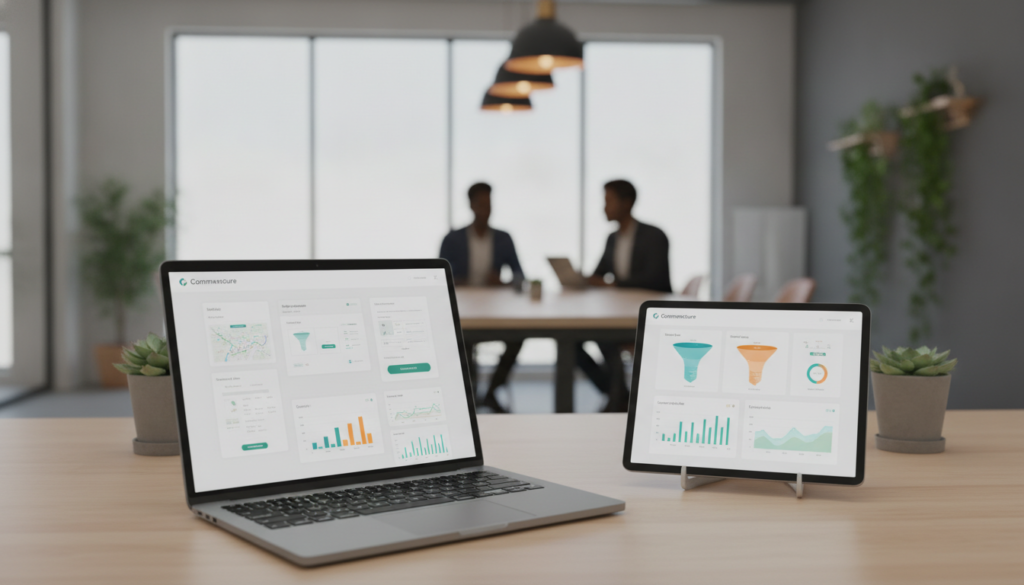
Harnessing the power of Shopify analytics transforms raw data into actionable insights. Understanding key metrics is vital for improving your store’s performance and driving sales. Tracking Average Order Value (AOV), Return on Ad Spend (ROAS), and cart drop-off rates provides essential information for strategic decisions.
Merchants earning over $1 million often rely on paid advertising as their primary growth strategy, while those below $100,000 find success in organic social media and product expansion. This data highlights the importance of tailoring marketing efforts to fit your store’s unique position.
Here are some key tracking strategies:
- Monitor AOV by landing page and customer segment to identify profitable patterns.
- Calculate ROAS alongside contribution margin and discounts to assess true profitability.
- Segment cart drop-off by device and payment method to isolate technical issues.
- Compare organic and paid performance to refine your marketing strategy.
- Connect email revenue to its return benchmark without double-counting conversions.
| Metric | Importance | Action |
|---|---|---|
| AOV | Indicates purchasing behavior | Adjust offers based on data |
| ROAS | Measures ad effectiveness | Optimize ad spend accordingly |
| Cart Drop-Off | Highlights checkout issues | Fix technical barriers |
Strategy 7 : Effective Shopify Apps to Automate Technical Fixes
Integrating the right apps can simplify complex technical tasks for your Shopify store. Automation is crucial for improving efficiency and enhancing customer experience. Let’s explore key technical fixes and the apps that can help.
Start with optimizing the checkout flow. Use a checkout-enhancement app to manage payment visibility and address capture. This ensures smoother upsells and post-purchase logic without hiding core friction points.
App Spotlight: Checkout Flow Enhancer
Implementing live chat can increase conversion rates by 8% to 20%. When unanswered product questions lead to exits, adding this feature is essential. It helps customers feel supported, boosting their shopping experience.
Consider using Klaviyo or Omnisend after stabilizing email capture. These tools automate welcome, cart-abandonment, promotional, and win-back sequences effectively.
Utilize BOGOS for promotions only after documenting offer economics. With over 2,000 reviews and a 4.9/5 rating, it’s a reliable choice, but ensure margin analysis is in place.
For loyalty programs, deploy Smile.io or Yotpo after clarifying repeat-purchase economics. Loyalty members spend 60% more than non-members, making this a valuable strategy.
| App | Functionality | Benefit |
|---|---|---|
| Checkout Flow Enhancer | Optimizes checkout process | Reduces cart abandonment |
| Klaviyo | Email automation | Improves customer engagement |
| BOGOS | Promotional tool | Increases average order value |
| Smile.io | Loyalty program | Boosts repeat purchases |
| Live Chat | Customer support | Enhances shopping experience |
Social Proof and Trust Signals: Building Merchant Credibility
Building credibility through authentic customer feedback is essential for any merchant aiming to boost conversions. Trust signals like customer reviews and trust seals can significantly impact a shopper’s decision-making process.
About 19% of customers abandon their carts when a store feels untrustworthy. Therefore, integrating verified customer reviews next to the purchase action is crucial. This strategy ensures that proof of quality is visible when customers evaluate products and prices.
Combine review quantity with quality by showcasing photos, use cases, and responses to negative feedback. Trust badges, such as secure-payment and money-back guarantees, should only be displayed when operationally true and supported by policy.
Utilize the 19% distrust-abandonment statistic to prioritize trust repair before expanding your marketing efforts. Measure review exposure against key metrics like add-to-cart rates and conversion rates to gauge effectiveness.

how to get sales on shopify: Proven Methods for Merchant Growth
Navigating the landscape of sales growth for your Shopify store requires a balanced approach. By combining organic and paid channels, you can maximize your reach and drive conversions effectively.
Start with word of mouth and personal networks, as 53% of surveyed merchants identified this as a first-year growth strategy. Engaging in community participation and utilizing SEO content can also enhance visibility.
Social media should be viewed as a distribution system, not just a posting obligation. About 35% of merchants leverage their social presence for growth. Testing paid ads at $5 to $10 daily allows for careful scaling based on landing-page conversion and return on ad spend.
Consider the example of Birdy Grey, which spent $10 to $15 daily on Instagram ads, leading to $2 million in first-year revenue. This illustrates disciplined iteration rather than a guaranteed outcome.
Finally, route paid traffic to relevant product pages instead of forcing every visitor through the homepage. This strategy aligns with The Ridge’s approach, giving shoppers more choices and enhancing their experience.
Strategy 8 : Strategic Marketing Channels and Traffic Generation Tactics
Choosing the right marketing channels can dramatically enhance your Shopify store’s visibility. By effectively leveraging influencer partnerships and social media, you can capture a wider audience and drive meaningful traffic.
Utilizing Influencer Partnerships
Influencer collaborations can be a game-changer. Consider compensating influencers with commissions on sales rather than upfront fees. This aligns their incentives with your success, ensuring they promote your products authentically.
Driving Traffic Through Social Media and Content
Platforms like Instagram, Facebook, and TikTok are essential for reaching potential customers. Tailor your content strategy to each platform:
- Instagram & Pinterest: Best for visual products.
- Facebook: Great for building community.
- TikTok: Ideal for short-form discovery.
- Google Shopping: Perfect for capturing active demand.
Additionally, consider engaging bloggers for niche editorial coverage. Personalized pitches and product samples can lead to qualified traffic and valuable backlinks. Building a content calendar with educational posts and product demonstrations can further enhance your store’s reach.
Strategy 9 : Advanced Personalization and Customer Engagement Techniques
Advanced personalization techniques can significantly enhance customer engagement and drive conversions. Implementing targeted popups and onsite feeds allows for a tailored experience that resonates with visitors.
Use native Shopify rules to target popups based on visitor type, cart value, and purchase history. This strategy avoids generic discounts and instead provides personalized offers that convert. For instance, Nutrimuscle captured over 7,000 emails with a welcome popup, achieving a 4.1% conversion rate.
Deploying Targeted Popups and Onsite Feeds
Utilize onsite feeds to showcase launches, bestsellers, and seasonal offers. Measure metrics like session depth and assisted revenue to gauge effectiveness.
Refining Email Marketing and Automation
Email marketing drives sales for over 70% of businesses. Start with a basic email system that includes welcome, cart-abandonment, and promotional sequences. Introduce loyalty incentives only when repeat-purchase behavior supports them, as loyalty members spend 60% more than non-members.
| Technique | Benefit | Implementation Tips |
|---|---|---|
| Targeted Popups | Increases conversions | Use visitor-specific rules |
| Email Automation | Boosts engagement | Set up basic sequences |
| Onsite Feeds | Enhances visibility | Showcase key products |
Conclusion
In conclusion, a successful e-commerce strategy hinges on understanding the root causes of low conversion rates. Start with trust and checkout diagnostics. The 19% distrust abandonment rate and 70% cart-abandonment rate represent immediate revenue leakage.
Next, repair page speed, mobile forms, payment choices, shipping visibility, and product-page clarity. These steps are essential before increasing traffic or expanding marketing spend.
Build offer tiers and bundles around AOV, contribution margin, and ROAS. Validate BOGOS rules against actual incremental profit.
Combine organic content, social media, email, influencers, bloggers, and paid ads only after each channel has a defined audience and measurable landing-page objective.
Finally, monitor conversion rate, AOV, ROAS, cart drop-off, email revenue, repeat purchase, and refund rate weekly. Automate proven fixes with carefully selected Shopify apps to ensure ongoing success.