If orders are going out late, inventory keeps getting lost, or your storage setup feels like it’s held together with duct tape your warehousing operation is probably the bottleneck.
This guide is for ecommerce business owners, operations managers, and fulfillment teams who want to get their warehousing right whether you’re just starting out or trying to fix what’s already broken.
Here’s what we’ll cover:
-
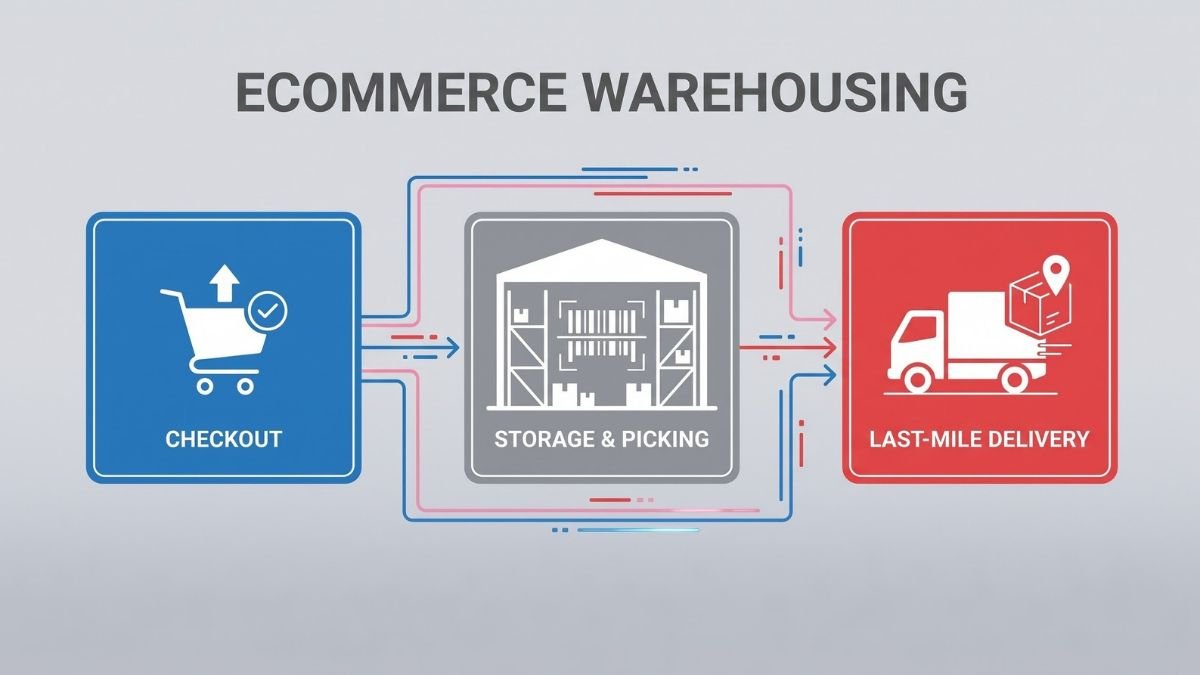
What ecommerce warehousing actually is and why the right setup directly affects your customer experience and bottom line
-
The different warehousing models from running your own space to working with ecommerce warehousing companies that handle fulfillment for you
-
How to run day-to-day warehouse operations that keep inventory accurate, orders moving fast, and returns from piling up
By the end, you’ll know exactly what ecommerce warehousing and order fulfillment looks like at every stage and what changes will make the biggest difference for your business.
What Is Ecommerce Warehousing and Why It Matters
How Ecommerce Warehousing Differs from Traditional Warehousing
Traditional warehousing is built around bulk storage and slow-moving inventory think pallets sitting for weeks before shipping to retail stores. Ecommerce warehousing is a completely different game.
| Factor | Traditional Warehousing | Ecommerce Warehousing |
|---|---|---|
| Order Volume | Low volume, large orders | High volume, small orders |
| Picking Method | Pallet or case picking | Unit-level picking |
| Shipping Speed | Days to weeks | Same-day to 2 days |
| Returns Handling | Minimal | High frequency, complex |
| Inventory Turnover | Slower | Rapid, demand-driven |
Ecommerce warehouses are optimized for speed, accuracy, and flexibility. They handle thousands of individual SKUs, process returns daily, and must ship orders within hours not days.
The Direct Impact of Warehousing on Customer Satisfaction and Retention
Your warehouse is quietly running your customer experience from the background. Shoppers don’t see it, but they absolutely feel it.
-
Shipping speed — 73% of online shoppers say fast delivery is a top factor in repeat purchases. Your warehouse location and pick-pack efficiency directly control this.
-
Order accuracy — Wrong items destroy trust faster than almost anything else. A single bad experience can push a customer to a competitor permanently.
-
Returns experience — Slow or messy returns handling kills repurchase rates. Clean, fast reverse logistics keep customers coming back.
-
Product availability — Stockouts lead to lost sales and frustrated shoppers who rarely return to check again.
Get these right, and your warehouse becomes a genuine competitive advantage not just a storage cost.
Key Challenges Ecommerce Businesses Face Without Proper Warehousing
When warehousing isn’t set up to match the demands of ecommerce, the problems stack up fast:
-
Overselling and stockouts — Without real-time inventory visibility, you’re essentially guessing what you have available.
-
Slow fulfillment — Disorganized picking paths and manual processes mean orders sit longer than customers will tolerate.
-
Unscalable operations — Seasonal spikes (Black Friday, holiday rushes) expose every weak point in a poorly structured warehouse.
-
High error rates — Manual processes create packing mistakes that translate directly into costly returns and refunds.
-
Cash flow problems — Excess inventory ties up capital while dead stock takes up expensive floor space.
These aren’t just operational headaches each one chips away at revenue and reputation.
4 Types of Ecommerce Warehousing Models to Consider
A. Private Warehouses: Full Control for Growing Brands
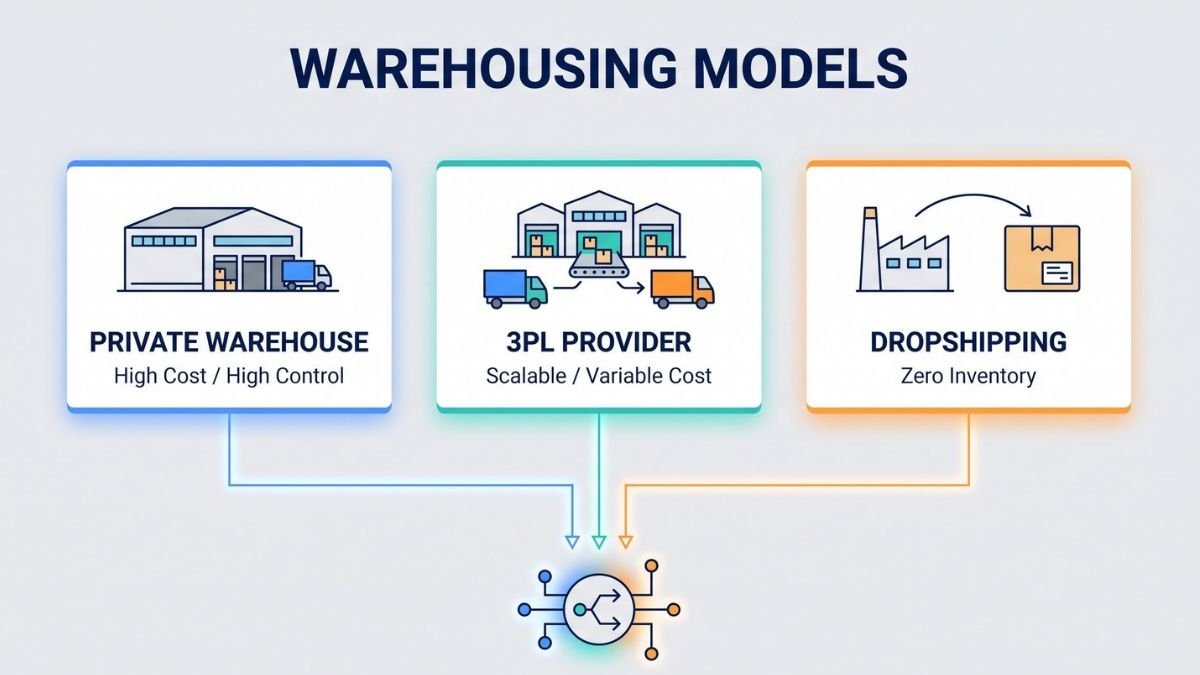
Running your own warehouse means you call every shot layout, staffing, processes, technology. That level of control is a major advantage when your brand has unique storage requirements or high order volumes that make outsourcing expensive.
The trade-off? Significant upfront investment. You’re responsible for rent or ownership costs, equipment, labor, and ongoing maintenance. This model works best for established brands with predictable, high-volume sales and the operational bandwidth to manage a facility.
Best for: Mid-to-large brands with consistent sales volume and complex fulfillment needs.
B. Third-Party Logistics (3PL): Outsourcing for Scalability
A 3PL provider handles warehousing, picking, packing, and shipping on your behalf. You send inventory to their facility, and they take it from there. This removes the operational headache of managing a warehouse while giving you access to professional logistics infrastructure.
3PLs are especially appealing for growing brands that want to scale without being locked into a long-term lease or building out a team. You pay based on storage space and fulfillment volume, so costs flex with your business.
Watch out for: Less visibility into day-to-day operations and potential service gaps during peak seasons if the 3PL is spread thin.
Best for: Fast-growing DTC brands ready to hand off fulfillment and focus on sales and marketing.
C. Dropshipping: Eliminating Inventory Holding Altogether
With dropshipping, you never touch the product. When a customer places an order, it goes straight to your supplier, who ships directly to the buyer. Zero warehousing costs, zero inventory risk.
The downside is real though thin margins, limited quality control, and slower shipping times. You’re also at the mercy of your supplier’s stock levels and fulfillment reliability.
Best for: New sellers testing product-market fit or businesses running lean with a wide product catalog.
D. On-Demand Warehousing: Flexibility for Seasonal Peaks
On-demand warehousing connects you with a network of warehouses that rent out unused space. Think of it like Airbnb for warehouse space you book what you need, when you need it.
This model is ideal for seasonal surges, product launches, or overflow inventory. No long-term commitments, no wasted square footage in slow months.
| Model | Upfront Cost | Control | Scalability |
|---|---|---|---|
| Private Warehouse | High | Full | Limited |
| 3PL | Low | Moderate | High |
| Dropshipping | None | Low | Very High |
| On-Demand | Low | Moderate | High |
Best for: Seasonal brands or businesses needing short-term storage without locking into contracts.
Ecommerce Warehouse Setup: Location, Layout & Costs
Choosing a Location: Proximity to Customers and Carrier Access
Where you park your warehouse directly affects your shipping speeds, costs, and customer satisfaction. A few things worth prioritizing:
-
Customer proximity: Placing inventory closer to your highest-density customer zip codes cuts last-mile delivery times and costs significantly.
-
Carrier access: Look for buildings near major highways, freight corridors, or UPS/FedEx/USPS hubs to get better rate negotiations and faster pickups.
-
Labor market: A location with a strong workforce pool keeps operations running without chronic staffing headaches.
-
Multi-node strategy: Brands shipping nationwide often split inventory across two or three fulfillment points (East Coast + West Coast) to hit 2-day delivery without paying for air freight.
Understanding Ecommerce Warehousing Costs
Costs break down into a few predictable buckets:
| Cost Type | What It Covers | Typical Range |
|---|---|---|
| Lease/Rent | Per sq. ft. monthly | $9–$20+/sq. ft. annually (varies by market) |
| Storage Fees (3PL) | Per pallet or bin, monthly | $15–$40/pallet/month |
| Pick-and-Pack | Per order or item | $2.50–$5.00/order |
| Receiving | Per pallet or hour | $25–$50/pallet |
| Software/WMS | Monthly subscription | $300–$2,000+/month |
If you’re leasing your own space, factor in utilities, insurance, racking equipment, and staffing on top of base rent. Third-party warehousing trades fixed costs for variable ones — great for brands with seasonal swings.
Designing Your Warehouse Layout, Storage Zones, and Shelving Systems
A well-designed layout is the difference between a fast-moving operation and one drowning in picking errors.
-
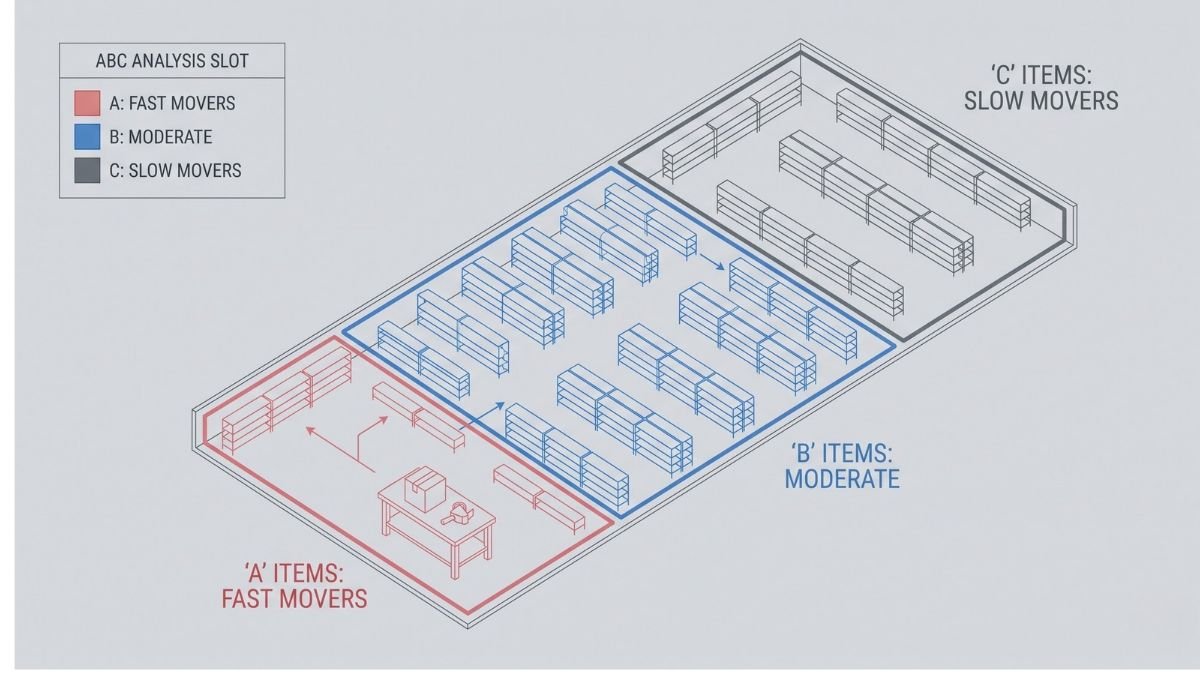
Hot/warm/cold zones: Put your fastest-moving SKUs closest to packing stations. Reserve back aisles for slow movers.
-
Shelving systems: Selective pallet racking works for bulky items; bin shelving and flow racks are better for small, high-velocity products.
-
Clear traffic flow: Separate inbound receiving from outbound shipping to avoid bottlenecks and cross-contamination of product.
-
Golden zone picking: Position high-frequency items between knee and shoulder height to reduce picker fatigue and speed up pick rates.
Planning for Safety, Compliance, and Future Scalability
-
Follow OSHA standards for safety and egress. Picking aisles should be an absolute minimum of 36 to 48 inches to safely accommodate pickers pushing fulfillment carts without causing traffic jams or collisions
-
Build in 20–30% unused capacity at launch you’ll fill it faster than expected.
-
Choose racking and software systems that can scale vertically (higher shelving, more SKUs) without a full redesign.
-
Document safety procedures and conduct regular audits to stay compliant and protect your team.
Essential Ecommerce Warehouse Operations & Inventory Best Practices
Receiving, Inspecting, and Auditing Incoming Inventory
Every warehouse operation lives or dies at the receiving dock. When a shipment arrives, count every unit, cross-check against the purchase order, and flag discrepancies immediately. Inspect for damage before signing off once you accept it, the liability shifts to you. Log everything into your system in real time so your inventory counts stay accurate from day one.
Schedule a blind receiving process where staff count stock without seeing the expected quantities first. This catches supplier errors that would otherwise slip through unnoticed.
Smart Storage Methods (SKU Slotting, ABC Analysis & FIFO)
Where you put products matters as much as having them in stock. Use ABC analysis to categorize inventory by velocity:
| Category | Description | Storage Location |
|---|---|---|
| A | Fast-moving, high-demand SKUs | Prime pick zones, closest to packing |
| B | Moderate sellers | Mid-warehouse |
| C | Slow movers | Back or upper shelving |
Always apply FIFO (First In, First Out) for perishables and products with expiration dates. Slot SKUs so pickers travel the shortest possible path reducing walking time cuts labor costs noticeably.
Order Picking and Packing Strategies
Picking the wrong method wastes hours every day. Here’s a quick breakdown:
-
Piece picking – One picker handles one order start to finish. Simple for low volumes.
-
Batch picking – One picker grabs items for multiple orders in a single trip. Cuts travel time significantly.
-
Zone picking – Each picker owns a section of the warehouse and handles only items in their zone.
-
Wave picking – Combines zone and batch picking; orders release in scheduled “waves” to balance workload.
As order volume grows, shift from piece to batch or wave picking. The efficiency gains are real.
Real-Time Inventory Tracking, Safety Stock, and Regular Cycle Counts
Track inventory movements as they happen receiving, picking, packing, and shipping. Set safety stock levels based on lead times and demand variability so you’re never caught short during a supplier delay.
Run cycle counts (counting a rotating subset of SKUs daily or weekly) instead of shutting down for a full annual count. This keeps accuracy high without disrupting operations.
Streamlining Carrier Handoffs and Returns Processing
Print shipping labels at the pack station and scan each package at carrier handoff to confirm it left the building. For returns, create a dedicated processing area: inspect, restock sellable items immediately, and quarantine damaged goods for vendor claims or disposal. A fast returns loop keeps inventory accurate and customers happy.
Ecommerce Warehouse Management Systems (WMS) & Technology
Warehouse Management Systems (WMS): Core Features That Matter
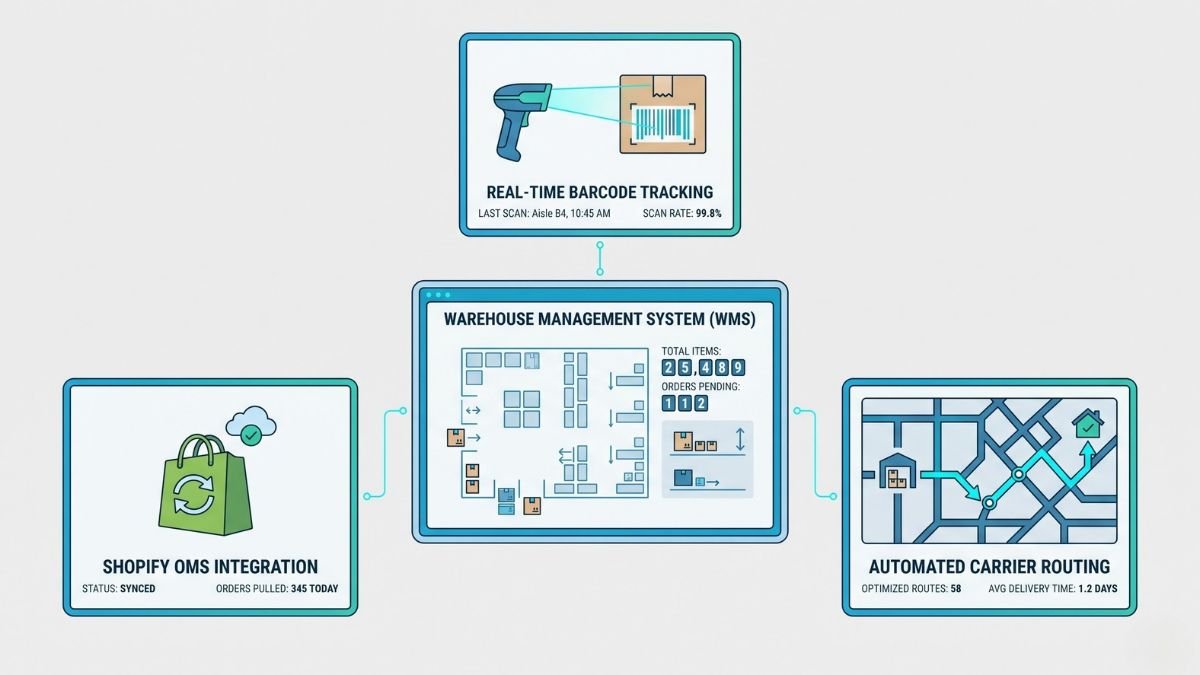
A solid WMS is the backbone of any ecommerce warehouse. Without one, you’re essentially running blind juggling spreadsheets, manual counts, and gut instinct. The right system gives you real-time visibility into every SKU, bin, and order moving through your facility.
Key features to look for:
-
Real-time inventory tracking — Know exactly what’s in stock, where it sits, and when it needs replenishing
-
Receiving and putaway management — Automates where incoming stock goes based on velocity and storage rules
-
Pick, pack, and ship workflows — Guides pickers through the most efficient routes to reduce errors and time
-
Returns processing — Handles reverse logistics without creating inventory chaos
-
Reporting and analytics — Tracks fill rates, order accuracy, labor productivity, and carrying costs
Popular WMS platforms for growing Shopify brands include Cin7 Core, Extensiv (formerly Skubana), ShipHero, and Fishbowl each suited to different operation sizes and complexity levels.
Barcode Scanning, RFID, and Warehouse Automation
Technology at the floor level dramatically cuts down on human error and speeds up throughput.
| Technology | Best For | Key Benefit |
|---|---|---|
| Barcode scanning | Small to mid-size operations | Low cost, easy to implement |
| RFID | High-volume, diverse SKU warehouses | Scan multiple items simultaneously |
| Conveyor systems | High-order-volume fulfillment centers | Speeds up pack and ship stages |
| Goods-to-person robots | Large-scale DTC warehouses | Reduces picker travel time by up to 70% |
| Automated sorting | Multi-channel operations | Routes orders by carrier or destination |
You don’t need a robot army to get started. Even adding barcode scanners to your receiving and picking process can meaningfully drop error rates right away.
Integrating Your WMS with Shopify, ERPs, and Order Management Software
Your WMS doesn’t work in isolation it needs to talk to the rest of your tech stack. A disconnected system creates data lags, overselling, and fulfillment delays.
Critical integrations to prioritize:
-
Shopify / BigCommerce — Syncs orders and inventory levels in real time
-
ERP systems (NetSuite, SAP) — Aligns financial data, purchasing, and supply chain planning
-
Order Management Software (OMS) — Manages order routing across multiple sales channels and warehouses
-
Carrier platforms (ShipStation, EasyPost) — Automates label generation and rate shopping
Look for WMS platforms that offer native connectors or open APIs so your team isn’t stuck in a custom-dev nightmare every time you add a new sales channel.
Key Warehouse Metrics & Best Practices for Scaling
3 Core Metrics to Track: Order Accuracy, Inventory Turnover, and Cost Per Order
If you’re not measuring these three, you’re essentially flying blind.
| Metric | What It Measures | Healthy Benchmark |
|---|---|---|
| Order Accuracy Rate | % of orders shipped without errors | 99.5%+ |
| Inventory Turnover | How often stock sells and replenishes | 4–12x per year (varies by category) |
| Cost Per Order | Total warehouse cost ÷ orders fulfilled | Depends on model; track trends over time |
Order accuracy directly impacts returns, customer satisfaction, and repeat purchases. Inventory turnover tells you if you’re holding too much dead stock or running dangerously lean. Cost per order helps you spot inefficiencies before they eat into margins.
Track these weekly, not quarterly. Patterns show up fast when you’re watching closely.
Standardizing Warehouse SOPs and Cross-Training Your Staff
Documented standard operating procedures (SOPs) are what separate a warehouse that scales from one that breaks under pressure. When every pick, pack, and ship task follows a consistent process, errors drop and onboarding new staff becomes significantly faster.
Build SOPs around:
-
Receiving and putaway procedures
-
Pick and pack workflows
-
Returns processing
-
Safety protocols and equipment use
Cross-training matters just as much. If only one person knows how to operate your receiving dock, you have a single point of failure. Rotating staff across functions builds resilience and keeps operations moving during callouts or peak rushes.
Partnering with 3PLs to Handle Peak Season Demand
Peak seasons like Q4 or back-to-school can 3x your order volume practically overnight. Scaling your own warehouse to handle that spike is expensive and usually unnecessary.
A 3PL partnership gives you flexible capacity without the long-term overhead. You can overflow inventory to a 3PL during high-demand periods, tap into their existing labor pool, and scale back when things normalize.
The key is setting this up before peak season hits, not in the middle of it.
Auditing Your Warehouse Operations Regularly
Quarterly audits catch problems that daily operations hide. Walk the floor with fresh eyes and look at:
-
Inventory accuracy (cycle counts vs. system records)
-
Slotting efficiency are your fastest movers still closest to packing stations?
-
Waste in movement, time, or packaging materials
-
Staff adherence to SOPs
Small inefficiencies compound fast at scale. Regular audits keep them from becoming expensive habits.
Conclusion
Getting your ecommerce warehousing right is one of the smartest investments you can make in your business. From picking the right warehousing model and nailing your warehouse layout to mastering day-to-day operations and tracking the metrics that actually matter, every piece of the puzzle plays a role in keeping your customers happy and your business growing. The right technology, like a solid WMS, can tie it all together and give you the visibility you need to stay ahead.
As your business scales, your warehousing needs will evolve too, so staying flexible and revisiting your setup regularly is key. Start with the basics, build good habits early, and don’t be afraid to switch models or upgrade your systems when the time is right. The goal is a warehouse that works as hard as you do, so take what you’ve learned here and put it into action today.
Frequently Asked Questions About Ecommerce Warehousing
What is the difference between a warehouse and a fulfillment center?
A warehouse is traditionally designed for long-term bulk storage of goods, often holding pallets of inventory for months or years. A fulfillment center, on the other hand, is an active logistics hub. It is designed to temporarily hold inventory, pick individual items, pack boxes, and ship ecommerce orders directly to consumers as fast as possible.
When should a Shopify store switch to a 3PL?
Most brands consider switching to a Third-Party Logistics (3PL) provider when they are consistently shipping more than 100 to 200 orders a month. Other triggers include when your team is spending more time packing boxes than focusing on marketing and growth, or when you simply run out of physical space in your current facility or garage.
What is warehouse SKU slotting?
SKU slotting is the strategic placement of products within a warehouse to maximize picking efficiency. It involves analyzing sales data to place high-velocity items (fast sellers) at eye level and as close to the packing stations as possible, while placing slower-moving items further away. This drastically reduces the time workers spend walking the floor.
How does a WMS integrate with Shopify?
A Warehouse Management System (WMS) integrates directly with Shopify via an API. When a customer places an order on your Shopify store, the data instantly flows to the WMS, which directs warehouse staff to pick the item. Once the item is scanned and packed, the WMS pushes the tracking number back to Shopify, which automatically emails the customer.
What is the best order picking strategy for high volume?
For high-volume operations, wave picking or batch picking are the most efficient strategies. Instead of one person picking a single order at a time (piece picking), wave and batch picking group multiple similar orders together, allowing a worker to pick all necessary items in one trip through the warehouse, drastically reducing travel time.
What is “Safety Stock” in ecommerce warehousing?
Safety stock is a buffer of extra inventory kept on hand to protect against unexpected events, such as sudden spikes in customer demand or delays from your suppliers. It prevents stockouts and ensures you can continue fulfilling orders even if your next incoming shipment is late.
Can I run an ecommerce warehouse without barcodes?
While you can run a small operation manually using printed pick lists, it is highly discouraged as you scale. Operating without barcodes relies entirely on human accuracy, which inevitably leads to picking the wrong items, shipping errors, and costly returns. Implementing basic barcode scanning drops the error rate to near zero.