If you’re running a Shopify store and your Klaviyo bill keeps climbing, you’ve probably already Googled “best Klaviyo alternative for Shopify” at least once. Omnisend keeps showing up — and for good reason.
This Omnisend review is for eCommerce store owners who want a straight answer: is Omnisend actually worth switching to, or is it just a cheaper tool with cheaper results?
Here’s what we’ll get into:
-
Omnisend vs Klaviyo — a real head-to-head look at features, pricing, and where each platform pulls ahead
-
Omnisend pricing and Shopify setup — what you actually pay at different contact tiers, and how fast you can go from signup to sending
-
Omnisend pros and cons — including the omnichannel automation and revenue attribution features that make it stand out, plus the areas where it falls short
No fluff. Just what you need to decide if Omnisend email marketing is the right move for your store.
What Is Omnisend and Who Is It Built For
Purpose-Built for eCommerce Stores
Omnisend is engineered exclusively for eCommerce — and that focus shows. Unlike general-purpose email platforms, Omnisend deeply integrates with Shopify and WooCommerce, automatically pulling in:
-
Product inventory
-
Store branding and styling
-
Existing customer lists
This seamless sync means most stores can launch their first campaign within 15–20 minutes of connecting their store — no manual configuration required.
Ideal Users and Who Should Look Elsewhere
Omnisend’s eCommerce-first design is its greatest strength — but also its clearest limitation. Here’s a quick breakdown:
| Great Fit | Not a Good Fit |
|---|---|
| Shopify or WooCommerce stores | B2B businesses |
| eCommerce stores generating $50k+/year | SaaS companies |
| Product-based online retailers | Creators and coaches |
| Brands scaling omnichannel marketing | Service-based businesses |
Every feature — from automations to segmentation — is built around products and orders. If your business doesn’t sell physical or digital products through an online store, Omnisend will feel like a square peg in a round hole.
With this in mind, next, we’ll explore how Omnisend stacks up against Klaviyo in a direct head-to-head comparison.
Omnisend vs. Klaviyo: Head-to-Head Comparison
A. Pricing at Equivalent Contact Tiers & Revenue Attribution Accuracy
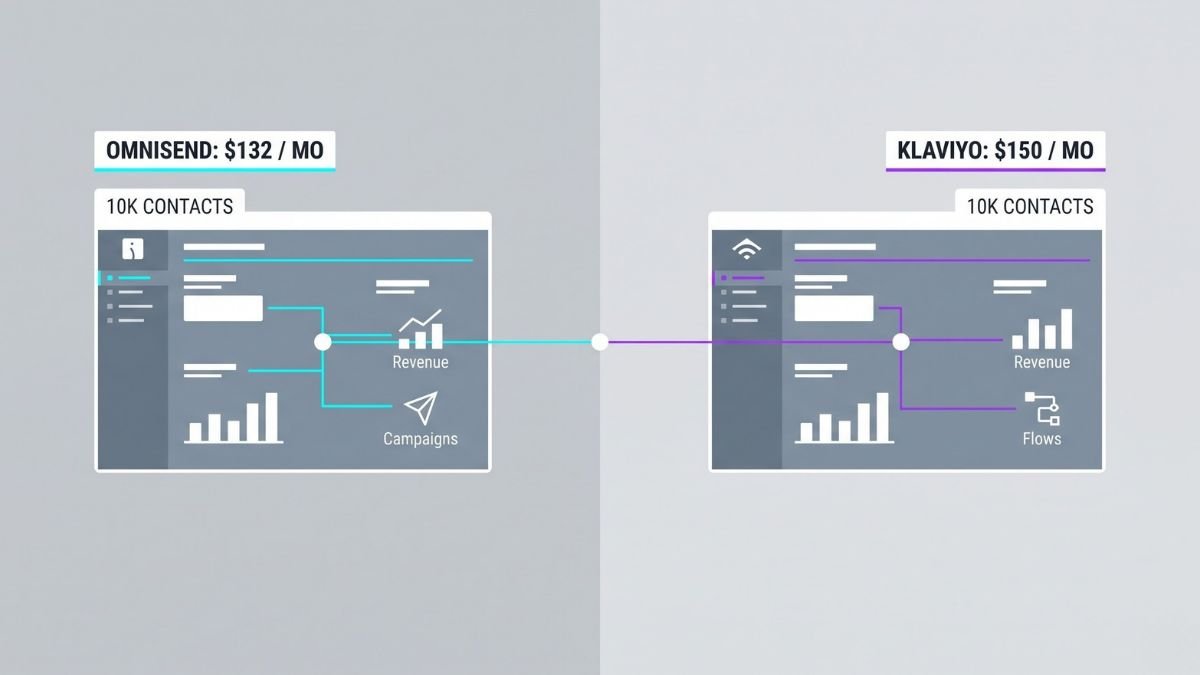
At 10,000 contacts, Omnisend consistently undercuts Klaviyo by 30–40%:
| Feature | Omnisend | Klaviyo |
|---|---|---|
| ~10K Contacts Price | ~$132/month | ~$150+/month |
| SMS Credits | Pay-as-you-go add-on (Pro only) | Charged separately |
| Revenue Attribution | Granular (campaign, automation, A/B variant) | Strong but less granular |
| Free Migration Support | ✅ Yes | ❌ No |
Omnisend’s revenue attribution stands out — every dollar is traced back to the exact campaign, automation, or A/B test variant, giving marketers precise ROI visibility.
B. When to Choose Klaviyo vs. When to Choose Omnisend
Choose Omnisend if you:
-
Want cost-effective eCommerce email automation with seamlessly integrated (though separately billed) SMS
-
Prioritize omnichannel workflows (email + SMS + push) in one unified UX
-
Need free migration support during platform transitions
-
Run a small-to-mid-size Shopify store
Choose Klaviyo if you:
-
Operate an enterprise-level store with 50K+ contacts
-
Require advanced segmentation with complex data models
-
Already have dedicated SMS infrastructure budgeted separately
With this in mind, next, we’ll explore Omnisend’s pricing plans and the Shopify setup process in detail.
Omnisend Pricing Plans & The Shopify Setup Process
Free, Standard, and Pro Plans Explained (2026 Updated)
Omnisend pricing is structured around contact list size, making it easy to forecast costs as your store scales.
| Plan | Starting Price | Emails/Month | Key Features |
|---|---|---|---|
| Free | $0 | 500 | 250 contacts, web push, SMS credit, full automation |
| Standard | $16/mo | 6,000 | Forms AI, 24/7 support, complete automation suite |
| Pro | $59/mo | Unlimited | Free global SMS credits, advanced reporting, account expert |
The Free plan is genuinely functional — not a stripped-down trial. It includes A/B testing, segmentation, and reporting, letting small stores operate on it until outgrowing the 250-contact cap.
The Standard plan is the recommended entry point for most growing stores. However, note Omnisend’s major 2026 pricing update: SMS is no longer available on the Free or Standard plans. To send SMS, you must upgrade to the Pro plan ($59/mo) and purchase volume-based SMS add-on credits, which start as low as $0.007 per message.
Effortless Store Connection and Klaviyo Migration Tools
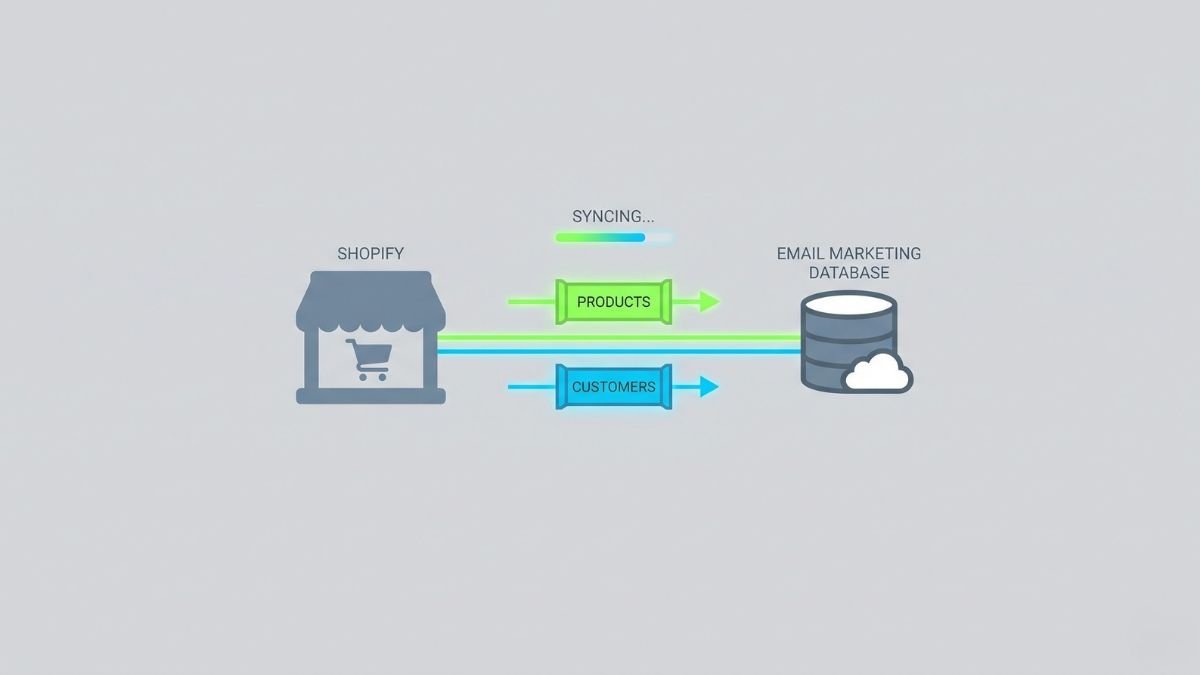
With Omnisend pricing in mind, the Omnisend Shopify integration is equally straightforward. The native Shopify app connects your store in minutes, syncing products, orders, and customer data automatically — making it a compelling, low-friction Klaviyo alternative for Shopify merchants ready to switch.
Shopify-Native Automations & Omnichannel Workflows
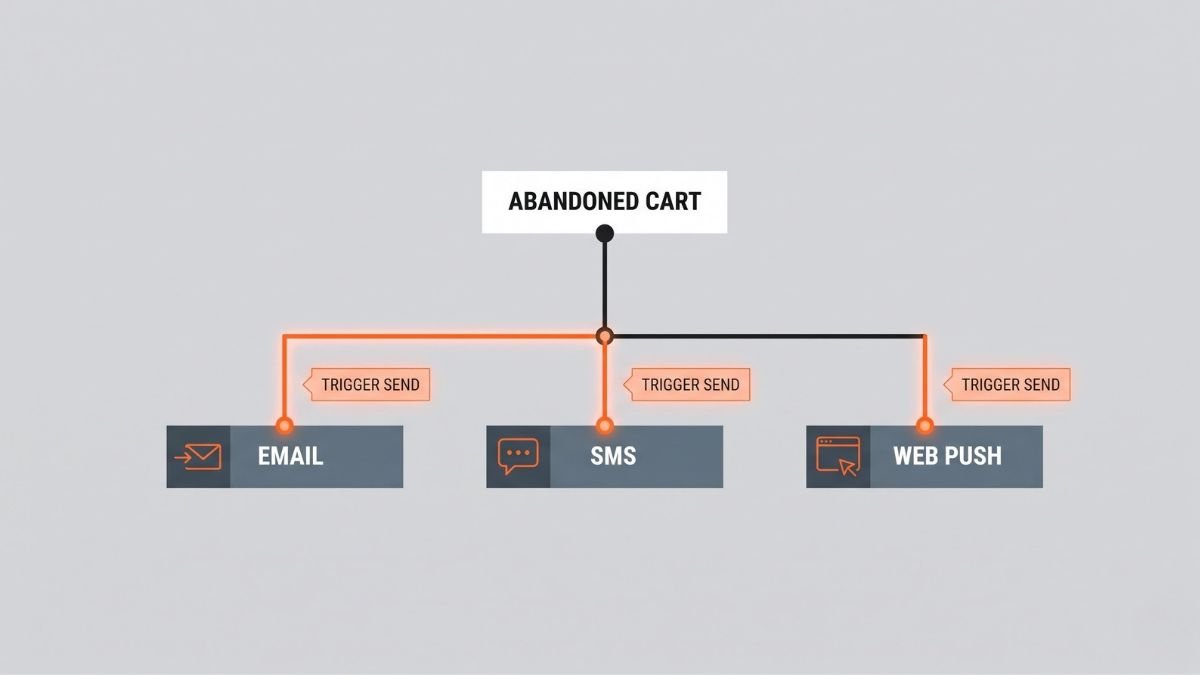
A. Combining Email, SMS, and Web Push in a Single Flow
Omnisend’s omnichannel approach lets you build unified automation workflows that combine email, SMS, and web push notifications within a single flow — no third-party integrations required.
When you connect Shopify, the platform automatically imports:
-
Product inventory and store styling
-
Customer lists and order history
-
Pre-built automation flows ready to activate immediately
This means your abandoned cart sequence, welcome series, and post-purchase flows can reach customers across multiple channels from day one — typically within 15–20 minutes of setup.
B. AI-Powered Dynamic Product Recommendations & Segmentation
With this in mind, Omnisend’s automated Shopify sync goes beyond basic data imports. By pulling in real-time product inventory and historical order data, the platform enables dynamic product recommendations and behavior-based segmentation without manual configuration.
Key capabilities enabled at setup:
| Feature | What It Pulls from Shopify |
|---|---|
| Product recommendations | Inventory + purchase history |
| Audience segmentation | Customer lists + engagement stats |
| Personalized automations | Order history + store behavior |
For merchants migrating from Klaviyo or Mailchimp, the self-serve migration tool also syncs contact properties, tags, segments, and engagement statistics automatically — making it one of the strongest Klaviyo alternatives for Shopify in terms of onboarding efficiency.
Deliverability Infrastructure: Staying Out of Spam
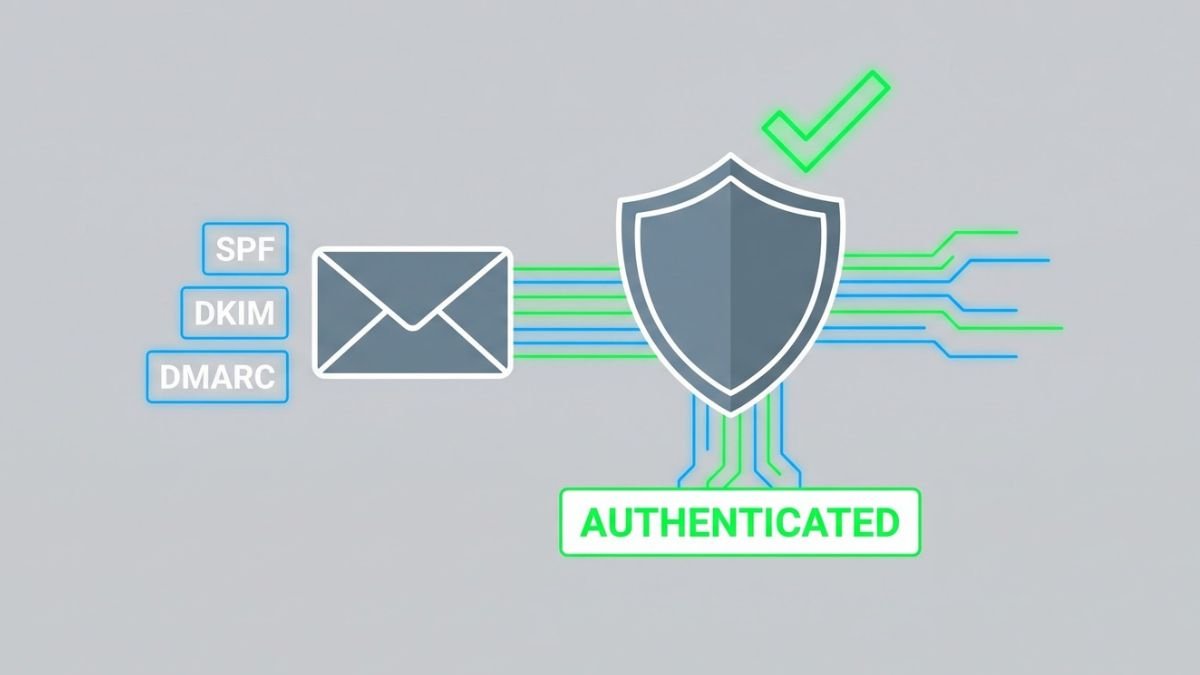
Setting up SPF, DKIM, and DMARC for Shopify Stores
No matter how good your email marketing software is, it won’t matter if your emails land in the spam folder. In 2026, major inbox providers like Google and Yahoo strictly enforce email authentication protocols. Omnisend makes this setup incredibly straightforward. During onboarding, Omnisend guides you through adding specific CNAME and TXT records to your domain’s DNS settings (whether you use GoDaddy, Cloudflare, or Shopify’s native domain hosting). This custom domain signature (DKIM) and Sender Policy Framework (SPF) prove to email clients that your store is legitimate, drastically improving your inbox placement rates.
Dedicated IPs, List Hygiene, and High-Converting Popups
For massive senders (typically those pushing hundreds of thousands of emails per month), Omnisend offers dedicated IPs on their enterprise-level plans, ensuring your sender reputation isn’t impacted by other businesses. However, for most users on shared IPs, Omnisend automatically manages list hygiene. The platform actively monitors hard bounces and spam complaints, cleaning your list so your sender score remains pristine.
To actually grow that list, Omnisend shines with its built-in forms. Instead of paying separately for an app like Justuno, you get native access to exit-intent popups, traditional signup forms, and interactive ‘Wheel of Fortune’ gamified popups. These sync directly into your Omnisend segments, meaning a customer who spins the wheel for a 10% discount is instantly dropped into your Welcome Series automation—no Zapier required.”
The Final Verdict: Pros, Cons, and Top Alternatives
Key Strengths and Limitations of Omnisend
Now that we’ve covered deliverability infrastructure, here’s a clear breakdown of where Omnisend excels and where it falls short:
| Strengths | Limitations |
|---|---|
| Native email, SMS, push, and web push in one workflow | Less robust CRM capabilities vs. enterprise tools |
| Pre-built flows for cart abandonment, welcome, and post-purchase | Advanced segmentation has a learning curve |
| A/B testing entire workflow paths with revenue-level attribution | Primarily optimized for eCommerce use cases |
The revenue-focused A/B testing is a standout feature. In Omnisend, you aren’t just testing subject lines; you can A/B test entire workflow paths. For example, you can split your abandoned cart flow: Path A receives three emails, while Path B receives one email followed by an SMS. Because Omnisend is so tightly integrated with Shopify’s checkout, you can see the exact revenue generated by Path A versus Path B. Comparing actual revenue lift, rather than just vanity metrics like open rates, gives merchants actionable data fast.
Alternative Options: ActiveCampaign, HubSpot, and Kit
With this in mind, if Omnisend doesn’t fully match your needs, consider these Klaviyo alternatives for eCommerce and beyond:
-
ActiveCampaign — Superior CRM depth and cross-industry automation flexibility
-
HubSpot — Best for businesses needing marketing, sales, and service under one roof
-
Kit (formerly ConvertKit) — Ideal for creators and content-first businesses prioritizing simplicity
For pure eCommerce email automation with omnichannel reach, Omnisend remains a compelling choice — especially as a best Klaviyo alternative for Shopify stores at competitive pricing.
CONCLUSION
Omnisend earns its place as the strongest Klaviyo alternative for Shopify stores. It’s cheaper at almost every contact tier, integrates email, SMS, and push notifications into a single workflow (though SMS requires Pro-tier volume credits), and its revenue attribution ties every dollar back to the exact campaign that drove it. Setup takes 15–20 minutes, migration from any existing ESP is free on paid plans, and the free plan gives you the full feature set up to 250 contacts—not a stripped-down trial. Across setup, automation, AI, support, and deliverability, Omnisend scores 4.6/5 in hands-on testing.
That said, it’s not the right fit for everyone. If you’re running a B2B business, a creator newsletter, or anything that isn’t a product-based store, look at ActiveCampaign, Kit, or HubSpot instead. And if you’re at the enterprise end with 50K+ contacts and a complex data model, Klaviyo’s segmentation depth may still justify the higher price tag. But for the vast majority of Shopify and WooCommerce stores—especially those looking to get more out of email and SMS without paying Klaviyo prices—Omnisend is the clearest choice on the market. Start with the free plan, connect your store, and see how it performs before committing to anything.
Frequently Asked Questions About Omnisend
Is Omnisend actually cheaper than Klaviyo?
Yes, Omnisend’s email plans are typically 30% to 40% cheaper than Klaviyo at equivalent contact tiers. However, both platforms now charge separately for SMS, so your final bill depends on your texting volume.
Does Omnisend still offer free SMS credits?
No. As of May 2026, Omnisend removed bundled SMS. You must now be on the Pro plan ($59/mo) and purchase volume-based SMS credits on a pay-as-you-go basis.
How long does it take to migrate from Klaviyo to Omnisend?
The initial Shopify connection takes about 15 minutes. Omnisend also offers a self-serve tool to instantly pull over your Klaviyo contacts, tags, and segments, plus free migration support on paid plans.
Can I use Omnisend if I don’t run an ecommerce store?
It’s not recommended. Omnisend is strictly purpose-built for ecommerce catalogs; if you run a B2B, SaaS, or service business, a CRM like ActiveCampaign or HubSpot is a much better fit.
How does Omnisend’s revenue attribution differ from Google Analytics?
Unlike Google Analytics, which relies on easily-blocked cookies and UTMs, Omnisend integrates directly with Shopify’s backend to tie every sale down to the exact email or SMS that drove it.
Does Omnisend include popup builders, or do I need a separate app?
You don’t need a separate app. All Omnisend plans include a native builder for standard popups, exit-intent triggers, and interactive “Wheel of Fortune” forms that sync directly to your flows.
Does Omnisend help with SPF, DKIM, and DMARC setup to prevent spam?
Yes. During onboarding, Omnisend provides the exact DNS records you need to copy and paste to authenticate your domain, keeping you compliant with strict 2026 Gmail and Yahoo anti-spam rules.