In the debate of Printful vs Printify, the decision hinges on much more than a $1.50 difference in the base cost of a blank t-shirt. For US DTC brands scaling, cheap manufacturing is meaningless if it introduces shipping delays, inconsistent print quality, or bloated app performance that drags down your Shopify conversion rates.
Printful operates 15 in-house production facilities to guarantee quality control, while Printify brokers orders through a massive third-party network to drive down costs.
In this technical comparison, we audit both platforms to determine which infrastructure actually protects your profit margins, API sync speeds, and customer retention.
Key Takeaways
- Choosing between platforms involves understanding the trade-offs in cost and fulfillment.
- Printful’s owned production reduces variability for repeat purchases.
- Printify’s third-party model can lower base costs but may impact consistency.
- Operational scale matters: Printful ships over 1 million products monthly.
- Both platforms can significantly affect your business’s profit margins.
Overview of Developer Requirements for US DTC Brands
For US DTC brands, selecting a print-on-demand platform requires a deep dive into technical and financial specifics. Developers must document essential metrics to ensure profitability and operational efficiency.
Understanding merchant profit metrics is crucial. The contribution margin is defined as retail revenue minus product costs, shipping, payment fees, refunds, and platform-specific operating leakage. This metric directly impacts your bottom line.
Printful employs approximately 1,600 people and is valued at around $1 billion. This infrastructure depth can provide a sense of stability. In contrast, Printify, with about 650 employees and a valuation of $300 million, offers flexibility but may introduce challenges in coordination.
Before choosing a POD service, developers should model:
- Landed cost
- Expected return rate
- Delivery variance
- Support workload
Technical challenges also arise in catalog synchronization, webhook reliability, and variant mapping. Understanding these aspects can prevent issues like overselling or cancellation costs.
The Sourcing Model: Ownership vs Third-Party Network

Navigating the sourcing model is essential for maximizing profit margins in e-commerce. Understanding the differences between in-house production and third-party networks can make or break your business strategy.
Printful operates 15 facilities across four continents. This centralized model ensures strict quality control. It minimizes print variance, especially for repeat orders. Merchants can expect consistent quality across all products, which is crucial for brand integrity.
In contrast, Printify leverages a network of fulfillment centers in the United States, Canada, China, Australia, and Europe. This setup offers merchants flexibility in choosing providers based on cost, location, and ratings. However, each choice introduces operational complexity, which can impact efficiency.
While cheaper sourcing can enhance gross margins, it often comes with increased requirements for quality audits and supplier management. Developers must weigh the benefits of single-source consistency against the redundancy of multiple providers. Ultimately, a lower product cost does not always equate to a lower total cost when considering refunds and customer service labor.
Margin Breakdown: Analyzing Base Costs and US Shipping Fees
To maximize profits, businesses must analyze both base item costs and the implications of shipping fees. Understanding the economics of products like the Bella+Canvas 3001 is essential. This model will separate the base item cost from decoration, fulfillment, carrier charges, and payment fees.
Printful employs flat shipping rates, which are designed to make multi-item shipments more predictable. This predictability can protect the contribution margin, especially for businesses focused on average order value (AOV).
In contrast, Printify provides provider-specific shipping estimates. This option can be a cost advantage, but it requires SKU-level shipping validation before launching products. For example, the recent increase in phone-case shipping from $4.59 to $4.99 highlights the need for dated cost snapshots.
Developers should remember that a lower base product price can quickly vanish when factoring in shipping, split shipments, or customer service interactions. To assist US merchants, a formula for testing free-shipping thresholds against product margin and conversion rates will be invaluable.
printful vs printify: A Technical Comparison
For merchants aiming to scale, the choice between in-house and third-party production models is pivotal. Each model presents unique advantages and challenges that can impact growth.
Printful operates through centralized production with 15 facilities across four continents. This structure enhances quality assurance and provides standardized workflows. However, capacity can still vary by product and location.
On the other hand, Printify connects merchants with third-party printers, having shipped over $500 million worth of products. This model allows for flexibility but requires active management of provider selection to ensure consistent quality.
When comparing these approaches, consider the following:
| Factor | Printful (Centralized) | Printify (Third-Party) |
|---|---|---|
| Quality Assurance | High consistency | Variable, depends on provider |
| Capacity Planning | Standardized workflows | Dependent on selected providers |
| Geographic Redundancy | Multiple locations | Varies by provider |
| Incident Response | Streamlined | Can be complex |
Ultimately, scalability should be viewed as predictable profitable output, not just the ability to increase product listings or order acceptance.
App Integration & Speed: Performance on Shopify

Evaluating the performance of print-on-demand apps on Shopify is crucial for operational success. This assessment goes beyond mere review scores and delves into product-sync latency, variant integrity, and webhook behavior.
Printful holds a Shopify rating of 4.6 from 6,585 reviews, while Printify boasts a rating of 4.8 from 6,240 reviews. While these ratings reflect merchant sentiment, they do not replace a thorough performance audit.
Developers should inspect app embeds, injected scripts, and DOM nodes. They must also evaluate network requests and unused JavaScript on OS 2.0 templates. These factors can significantly impact rendering speed and user experience.
Slow rendering can inflate customer acquisition costs (CAC) and hinder mobile conversions. Merchants are advised to test catalog synchronization with unpublished products and high-variant SKUs before launch. This proactive approach helps ensure a smoother rollout and better operational efficiency.
Print Quality & Branding: White-Labeling and Customization Options
The impact of branding on customer loyalty cannot be underestimated, especially when it comes to print-on-demand services. Merchants should explore how custom branding elements can elevate their products and enhance customer recognition.
Printful supports outside labels across its clothing and hat catalog. This feature allows for consistent branding that customers can easily recognize. In contrast, Printify offers inside-neck and sleeve labels through selected print partners, which can limit options for merchants.
Branded labels can significantly improve repeat-purchase recognition without complicating the landed-cost model. Here are some key aspects to consider:
- Printful’s outside-label availability enhances visibility on clothing and hats.
- Printify’s partner-dependent labels require SKU-level confirmation for a cohesive branded experience.
- Printful offers a range of pack-in inserts, including flyers, coupons, and thank-you cards, which serve as valuable retention and referral assets.
- Developers should document label placement, artwork requirements, and per-unit charges to ensure fulfillment compatibility.
Product Catalog and Variety: Diverse Custom Product Offerings
The variety of products available can significantly influence a merchant’s choice of print-on-demand service. A broad catalog can cater to diverse customer preferences, enhancing brand appeal and potential sales.
When comparing offerings, Printful lists approximately 344 products, while Printify boasts around 900 products. This difference is notable for merchants aiming to provide a wide range of options.
Here’s a breakdown of key categories:
| Category | Printful | Printify |
|---|---|---|
| Men’s T-Shirts | 30 | 50 |
| Mugs | 5 | 50 |
| Eco-Friendly Products | 50 | 50 |
| Other Items | Variety | Variety |
Both platforms offer around 50 eco-friendly products, supporting sustainability initiatives. Developers should assess whether this catalog breadth leads to increased revenue or simply complicates synchronization and customer support.
Order Fulfillment and Processing Times
Order fulfillment timelines can greatly impact customer satisfaction and business efficiency. When comparing standardized production times with Printify’s variable schedules, the differences become apparent.
Printful generally fulfills orders in two to five days, with most shipping within three business days. This consistency allows merchants to set reliable delivery estimates, which is crucial for customer trust.
In contrast, Printify has an average fulfillment time of two to seven days. However, this can vary significantly based on the selected print provider. This variability complicates delivery promises, making it essential for developers to monitor provider status and production times closely.
Merchants should consider the following:
- Use Printful’s consistent two-to-five-day range as a baseline for customer-facing delivery estimates.
- Analyze Printify’s variable times by provider to avoid miscommunication.
- Track average production time and carrier handoff to manage expectations.
- Late shipments can lead to refund requests, increased support volume, and negative reviews.
- Calculate expected delivery windows by SKU and destination rather than using a broad estimate.
As one expert noted, “Understanding your fulfillment capabilities is key to maintaining customer loyalty.”
Sample Ordering Benefits and Discount Structures
Understanding sample ordering benefits is crucial for merchants looking to validate their products before launch. Printful offers significant discounts on sample orders, which can greatly reduce pre-launch costs. Free-plan users enjoy a 20% discount, while Growth members benefit from a 25% discount.
Merchants can order up to three sample products monthly. However, once they reach $300 in monthly sales, this allowance increases to five sample orders, totaling 15 products. This flexibility allows businesses to test various custom products effectively.
In contrast, Printify does not provide any sample discounts, which can impact break-even calculations for merchants. They must account for standard sample prices when testing multiple blanks, print locations, and colorways.
Using samples is essential for validating print placement, color accuracy, and packaging. A modest sample budget can prevent larger losses from defective inventory expectations and costly replacement orders.
User Experience and Design Tools Comparison
Design tools and user experience are critical factors for merchants when selecting a print-on-demand platform. Both platforms offer unique features that can significantly impact the creative process.
Image Uploads, File Types, and Size Limits
Printful accepts JPEG and PNG files up to 200MB, allowing for high-resolution artwork. In contrast, Printify supports JPEG, PNG, and SVG files but limits uploads to 100MB. This SVG support can be a practical advantage for vector workflows, despite the smaller file-size cap.
Mockup Generation and Scene Variety
2,550 mockup scenes, Printful offers extensive options for creative testing across landing pages and ads. Meanwhile, Printify provides fewer mockup choices, which could limit creative flexibility.
Overall, the differences in design tools can either streamline or complicate the product launch process. Developers should assess whether these features reduce production time and creative outsourcing costs.
Print Provider Performance: Quality Variances and Ratings
Assessing the performance of print providers is crucial for understanding quality variances in the print-on-demand industry. Printful utilizes high-quality equipment such as Kornit printers for direct-to-garment (DTG) printing, Tajima machines for embroidery, and Mimaki inkjet along with Inkcups Helix printers for UV printing. This equipment standardization supports repeatable output across various techniques.
Printful’s reported 0.24% return rate due to quality issues serves as a useful benchmark, though it is not a guarantee for every garment or decoration method. On the other hand, Printify provides a Print Provider Performance Score, which can help merchants reduce variance within their third-party network.
Before scaling, it’s recommended to test for:
- Wash durability
- Color accuracy
- Edge definition
- Embroidery density
- Blank-garment consistency
Developers should convert observed defects into expected replacement costs, refund exposure, support labor, and net contribution-margin impact. Understanding these factors will help in making informed decisions that enhance product quality and customer satisfaction.
Integration with E-Commerce Platforms: Beyond Shopify
Integrating with various e-commerce platforms is crucial for merchants looking to optimize their operations. While Shopify is a popular choice, exploring additional options can enhance order processing and customer satisfaction.
Printify offers free Pop-Up Stores that come with no transaction fees. These stores utilize printify.me subdomains, allowing for quick testing but with limited design customization. In contrast, Printful launched its Quick Stores in June 2024, specifically for US sellers. These stores operate under storename.printful.me subdomains, enabling merchants to start selling without a full e-commerce setup.
When evaluating these platforms, consider the following:
- Compare workflows on Shopify, Wix, Etsy, Amazon, and WooCommerce for order routing and catalog synchronization.
- Printify’s Pop-Up Stores provide a cost-effective testing route but may limit long-term brand control.
- Printful’s Quick Stores simplify the launch process, though they may sacrifice some SEO control and analytics capabilities.
- Reliable order status updates and fulfillment notifications are essential across all sales channels.
Ultimately, choosing the right integrations can streamline your business processes and enhance customer experiences, ensuring a competitive edge in the print-on-demand market.
Enhanced Branding and Personalization Features
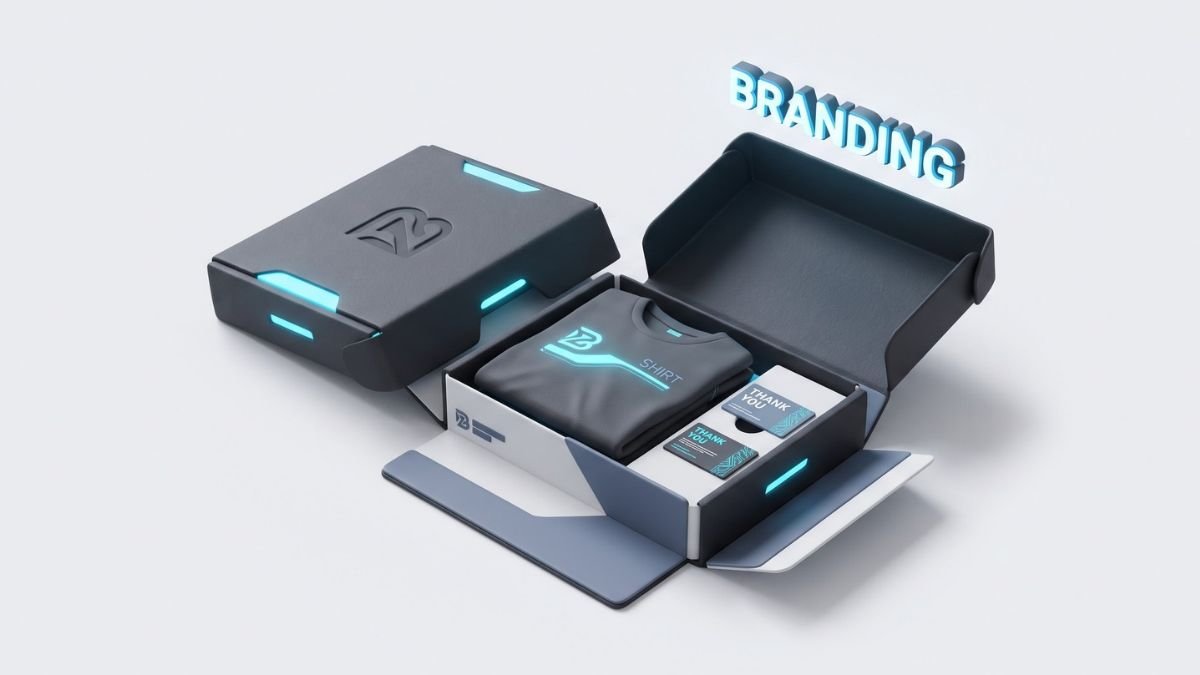
Branding plays a crucial role in enhancing customer experience and loyalty, especially in the print-on-demand landscape. Merchants should leverage personalization options to create a memorable unboxing experience. This can lead to increased customer retention and higher average order values (AOV).
One platform excels in offering robust personalization features:
Custom Packaging, Inserts, and Personalization Tools
This platform supports customer personalization for embroidery, direct-to-garment (DTG) products, and wall art. It integrates seamlessly with Shopify, Etsy, and WooCommerce, allowing for customer-entered text or image workflows. Here are key features to consider:
- Personalization Support: Options for embroidery, DTG products, and wall art enhance perceived value.
- Compatibility: Works with major platforms like Shopify, Etsy, and WooCommerce for easy integration.
- Custom Branded Packaging: Merchants can supply their packaging, adding a unique touch to their products.
- Inserts: Flyers, coupons, business cards, stickers, postcards, and thank-you cards can be included to boost retention and referrals.
- Fallback Behavior: Define how to handle missing personalization data or unsupported variants to ensure smooth order processing.
Incorporating these features can significantly enhance the customer experience and contribute to long-term brand loyalty.
| Feature | Details |
|---|---|
| Personalization Options | Embroidery, DTG, wall art |
| Platform Compatibility | Shopify, Etsy, WooCommerce |
| Custom Packaging | Supplied by merchants |
| Insert Options | Flyers, coupons, cards |
Conclusion
When selecting a POD platform, it’s essential to consider how various features align with your business goals. For high-margin US brands, Printful often emerges as the preferred choice due to its consistent quality and predictable fulfillment times. This platform ensures that your branding remains intact and reduces operational variances.
On the other hand, Printify typically offers lower base costs, allowing merchants to explore a broader catalog of products. However, this comes with the trade-off of managing multiple providers and potential quality inconsistencies.
In summary, if your priority is maintaining a high-quality customer experience, Printful is likely the better option. If you seek to maximize margins through aggressive pricing strategies, Printify could be the way to go. Yes, Printify integrates seamlessly with Shopify, making it a viable choice for many merchants.
Frequently Asked Questions
What are the main differences between the two print-on-demand platforms?
The primary differences lie in their sourcing models and quality control. One operates with in-house facilities, ensuring tighter quality management, while the other utilizes a third-party network, which can offer cost advantages but may introduce variability in product quality.
How do I evaluate the profit margins when using these platforms?
Analyze the base costs of products and factor in shipping fees. Understanding these metrics is crucial for determining your pricing strategy and ensuring profitability.
What kind of custom branding options are available?
Both platforms offer various branding features, including custom neck labels and packaging inserts, allowing you to create a cohesive brand experience for your customers.
How do fulfillment times compare between the two providers?
Fulfillment times can vary significantly. One provider may have standardized production times, while the other might depend on individual print provider schedules, affecting overall order delivery.
Are there any benefits to ordering samples before launching my store?
Yes, ordering samples allows you to assess product quality firsthand. Additionally, many platforms offer discounts for bulk sample orders, which can be beneficial for scaling up your business.
What integration options are available for e-commerce platforms?
Both platforms provide integrations with various e-commerce solutions beyond Shopify, facilitating streamlined order processing and inventory management across multiple channels.
How do the design tools and user experience compare?
The user experience can differ, particularly in terms of image uploads, file types, and mockup generation. It’s essential to evaluate which platform’s tools align better with your design needs.
What should I know about print quality and customer satisfaction?
Print quality can vary between providers. It’s important to review ratings and feedback to ensure that the chosen platform meets your quality standards and customer expectations.